

Agricultural exports grow steadily
According to the Ministry of Agriculture and Rural Development, in the first four months of 2024, the total export turnover of agricultural, forestry and fishery products nationwide is estimated at 19.06 billion USD, up 23.7% over the same period in 2023; the trade surplus of the whole industry is 4.74 billion USD, up 71.5%. With this result, the agricultural sector is ready to reach new export records.
The items that have reached an export turnover of more than 1 billion USD include: wood and wood products (4.84 billion USD, up 23.7%); coffee (2.57 billion USD, up 57.9%); rice 2.08 billion USD (up 36.5%), vegetables and fruits 1.8 billion USD (up 32.1%); and cashew nuts 1.16 billion USD (up 21.2%).
Breakthrough in sales price and turnover
Data from the Center for Digital Transformation and Agricultural Statistics (Ministry of Agriculture and Rural Development) shows that in the first four months of 2024, many agricultural products had an average export price that increased compared to the same period, such as: rice reached 644 USD/ton, up 22.2%; coffee 3,402 USD/ton, up 49.7%; rubber 1,487 USD/ton, up 6.9%; pepper 4,214 USD/ton, up 36.4%. The US, China and Japan are the three largest export markets for agricultural, forestry and fishery products of Vietnam. The export value to the US market accounted for 20.1%, up 25.7% over the same period in 2023; the Chinese market accounted for 18.9%, up 15.1% and the Japanese market accounted for 6.9%, up 9.6%.
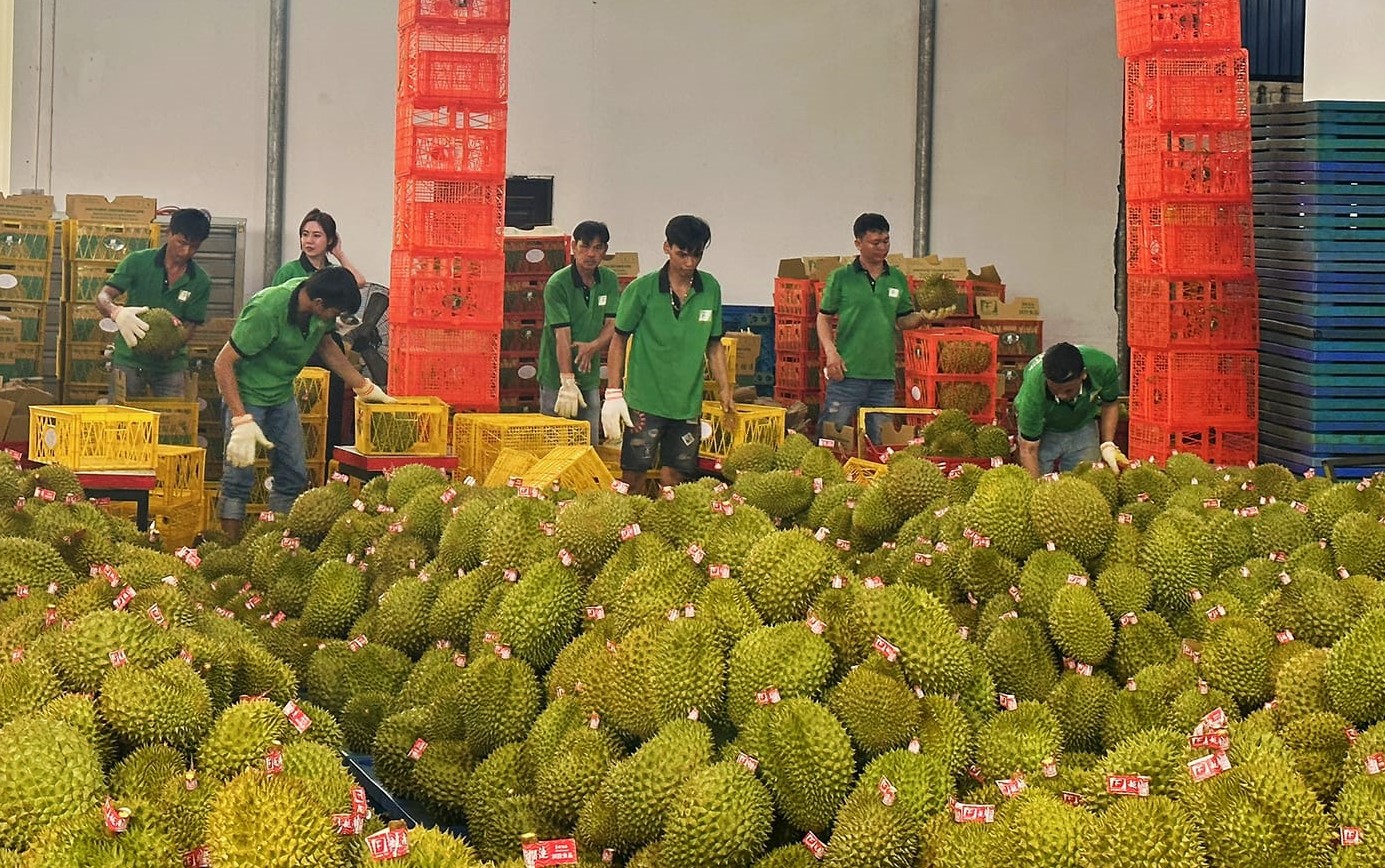
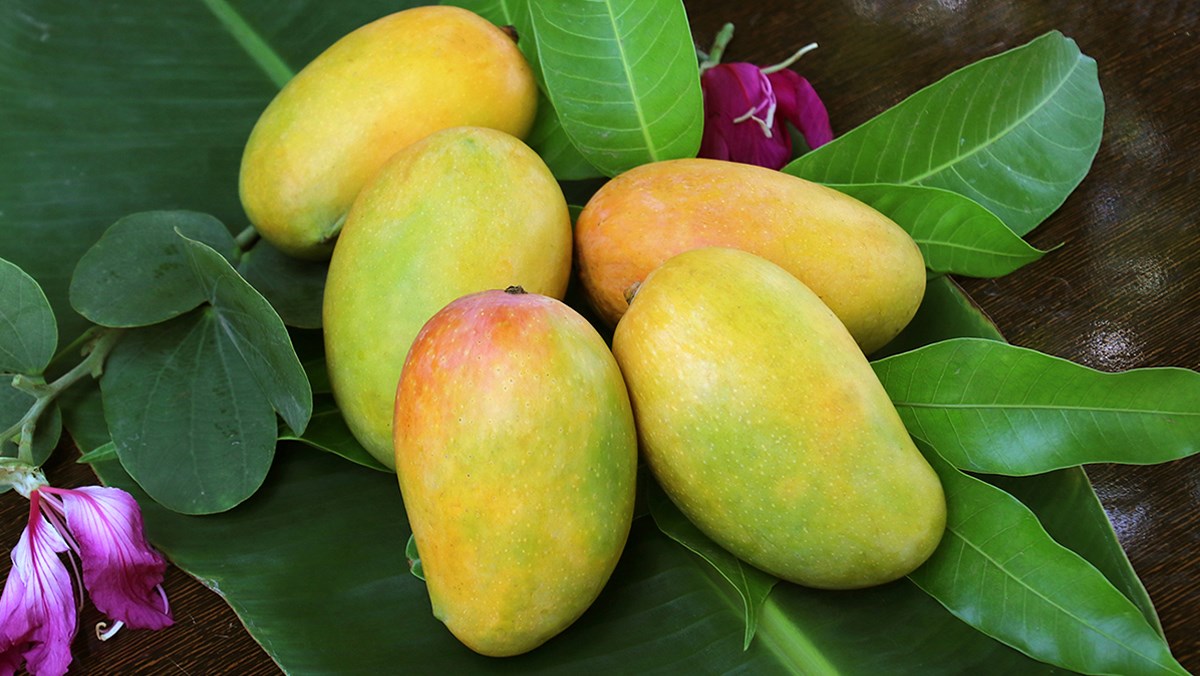
As one of the industries with high growth rates right from the first months of the year, the fruit and vegetable industry is on track to achieve a record annual export turnover of 6-6.5 billion USD. General Secretary of the Vietnam Fruit and Vegetable Association Dang Phuc Nguyen informed: In the first four months of 2024, fruit and vegetable exports to the Chinese market achieved high value, contributing significantly to the industry's remarkable growth. In the first quarter of 2024 alone, exports to China reached 759.4 million USD, an increase of 32.4% over the same period in 2023; accounting for 59.1% of the total export value of fruit and vegetable products. In addition, fruit and vegetable exports are also being boosted to other regions such as Europe, America, Oceania and Africa.
Regarding the coffee industry, according to the Import-Export Department (Ministry of Industry and Trade), Vietnam's coffee exports in the second quarter of 2024 will continue to increase due to high global demand. Currently, the Vietnamese coffee industry benefits from a strong upward trend in export prices. The International Coffee Organization (ICO) forecasts that coffee consumption in the 2023/2024 crop year will increase by 2.2% compared to the 2022/2023 crop year, reaching 117 million bags. This is an opportunity for the Vietnamese coffee industry to increase exports, aiming to reach more than 5 billion USD in 2024. In the first quarter of 2024, tensions in the Red Sea affected about 36% of total global coffee exports, mainly coffee exports from Southeast Asia. However, Vietnam's coffee export market is still quite open.
In the European Union (EU), although coffee imports from non-EU markets have decreased in recent times, imports from Vietnam have still increased. In the first two months of 2024 alone, the EU's coffee imports from Vietnam increased by 24.5% over the same period in 2023, reaching 318 million EUR (equivalent to 340 million USD). In Japan, Vietnam's coffee export value also recorded growth when in the first two months of 2024 it reached 82 million USD with a volume of 23.4 thousand tons.
Along with vegetables and coffee, rice exports will also continue to grow from mid-2023, when the turnover in the first four months of 2024 increased by 57.9% over the same period. It is worth mentioning that the selling price of Vietnamese rice is also high, averaging nearly 650 USD/ton. On the other hand, the rice export market is also gradually expanding, not only focusing on traditional markets such as the Philippines, Indonesia, Malaysia but also penetrating deeper into the EU, US and other Asian markets. For example, in Singapore, in the first three months of 2024, Vietnam became the largest rice exporter to this market for the first time in recent times, reaching a turnover of about 36.15 million SGD, an increase of 80.46% over the same period in 2023. In addition, Vietnamese rice products are also positively received in the European and American markets. In 2023, the value of rice exports to this market area will reach 64 million USD, an increase of 50%. In the first two months of 2024 alone, the export value increased by an impressive 238%, reaching 27.8 million USD.
Compliance is the “key” to growth
In 2024, the EU will implement many regulations related to circular economy and sustainable development such as: Carbon Border Adjustment Mechanism (CBAM); Anti-Deforestation Regulation (EUDR)... In which, CBAM is a landmark tool of the EU to prevent carbon leakage, requiring businesses to update and comply if they want to expand their market share in this region. Mr. Le Thanh Son, Business Director of 2-9 Dak Lak Import-Export Company Limited (Simexco DakLak) said: At the end of April, Simexco DakLak was awarded two certificates by the 4C Association (the organization implementing the Common Code of Conduct for the Coffee Community) for two growing areas that meet the EUDR regulations of the European Union. The two growing areas have an area of 9,500 hectares, an output of more than 35,000 tons with nearly 8,000 farmers participating. This is the first certification in Vietnam and also the first certification in the world in this field.
According to the Anti-Deforestation Regulation, the EU will ban the import of 7 groups of products, including coffee, if the products are produced on areas obtained through deforestation from 2020. This is a very strict regulation for coffee exporting regions to Europe. To maintain and develop in the EU market, Simexco DakLak is currently completing the application for EUDR certification for 5,375 hectares of coffee plantations with 4,597 participating farmers. At the same time, it is cooperating with the Sustainable Trade Initiative (IDH) to update data and implement activities to achieve EUDR certification for 6 coffee production regions in Buon Ma Thuot city, Buon Ho town, Krong Nang district, Cu M'gar district, Cu Kuin district, Krong Ana district with an area of 106,000 hectares, an output of 300,000 tons and about 82,000 participating farmers.
“However, to comply with EUDR regulations, businesses must invest heavily, collect large amounts of data and carry out a series of necessary legal procedures, so not all businesses have strong enough resources to implement. Therefore, Vietnamese coffee exports also need a strategy to reduce their over-reliance on the European market. Currently, 60% of Vietnam's coffee exports go to Europe. Accordingly, exports should be expanded to emerging and potential markets such as China, India and Japan to increase turnover,” Mr. Le Thanh Son emphasized.
In order to promote compliance with international regulations on agricultural exports, the rice industry has not only expanded the production of high-quality rice, organic production, and value chain building, but has also pioneered a focus on a difficult segment today, which is low-emission rice production, aiming to become the first country in the world to sell low-emission rice. Deputy Minister of Agriculture and Rural Development Tran Thanh Nam said: Vietnam's rice exports have recorded strong growth recently, but in reality, there are not many large-scale, concentrated rice cultivation areas; rice cultivation is still unsustainable because farmers use a lot of chemical fertilizers and pesticides, which affect the environment and increase greenhouse gas emissions.
With the goal of reducing 20% of production input costs, the project "Sustainable development of one million hectares of high-quality and low-emission rice cultivation associated with green growth in the Mekong Delta by 2030" will contribute to reducing rice production costs for farming households by about VND9,500 billion. In addition, the application of by-product treatment and recycling processes and building a low-emission rice brand will contribute to increasing the value of the entire rice chain by 40%, in which the profit margin of rice growers will increase by 50%. This is also the solution to the problem of diversifying Vietnam's rice export markets, especially with high-quality, high-priced markets such as Europe, the US, Japan, etc.
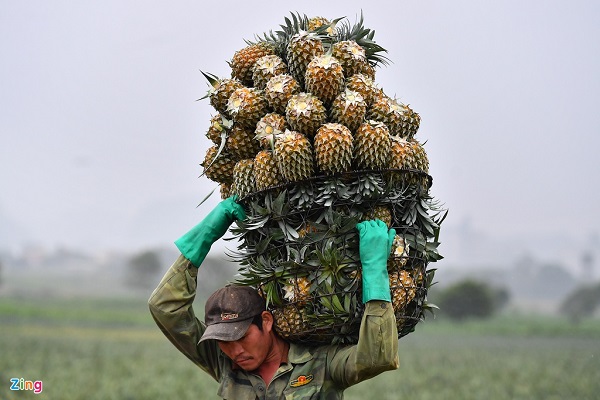
In 2024, Vietnam's agricultural sector aims to achieve an export turnover of 55 billion USD and a GDP growth rate of 3.5%. The momentum in the first months of 2024 is a positive signal showing the efforts of the entire sector on the journey to realizing the goal. The market has opened, the demand for agricultural, forestry and fishery products globally is forecast to increase, so improving the capacity to enforce regulations on product quality, labor, environment... in production and export will help Vietnamese agricultural products win big in the international market.
KING FOODS GLOBAL COMPANY LIMITED
Address: 140/4 Vo Thi Sau street, district 3, Hochiminh City, VietNam
Tel: +84-91 8228188
Email: info@kingfoodsglobal.com
 0918 228 188
 info@kingfoodsglobal.com
 http://kingfoodsglobal.com/